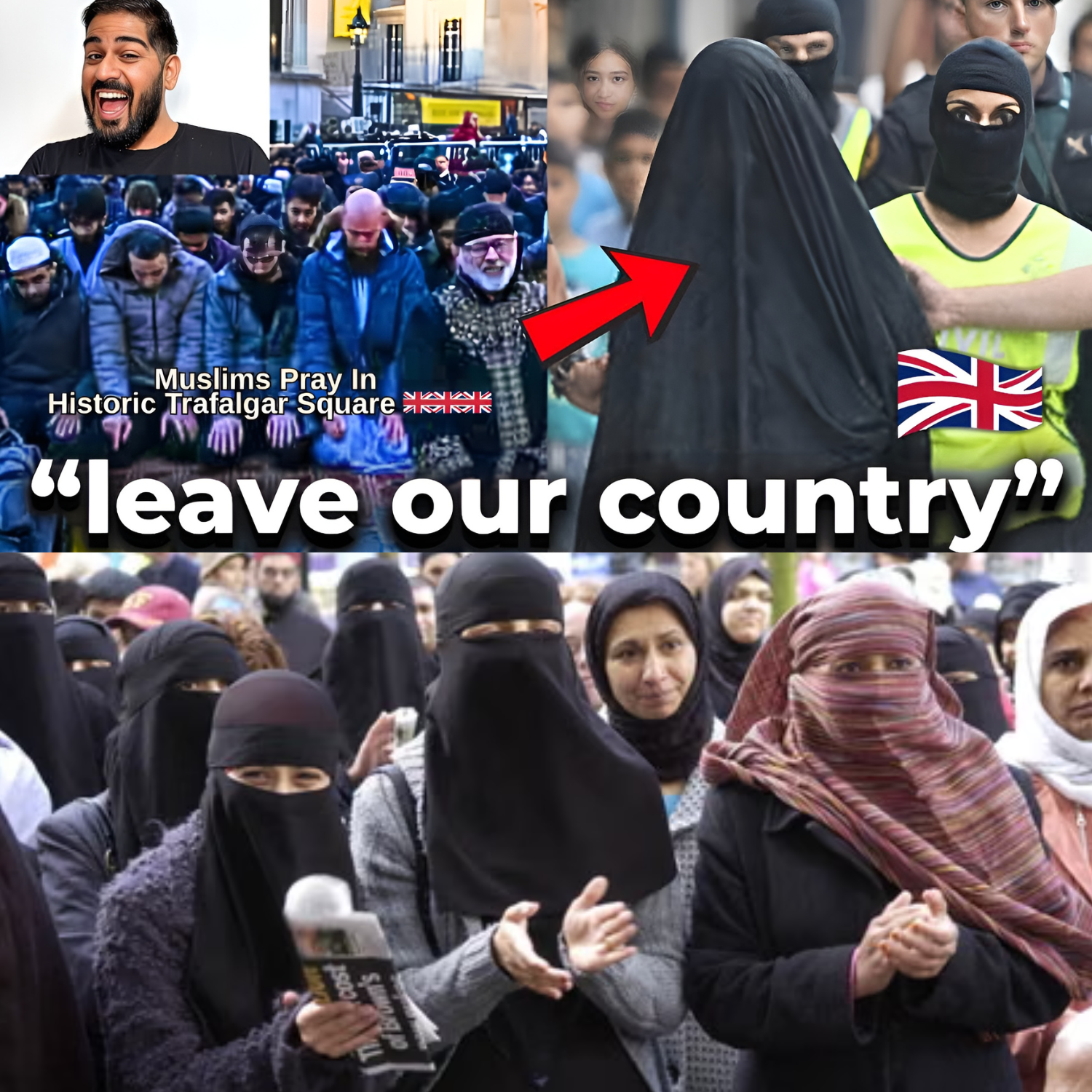
Muslims Tried Making NO GO Zones In The UK…And The British Sent Them BACK!
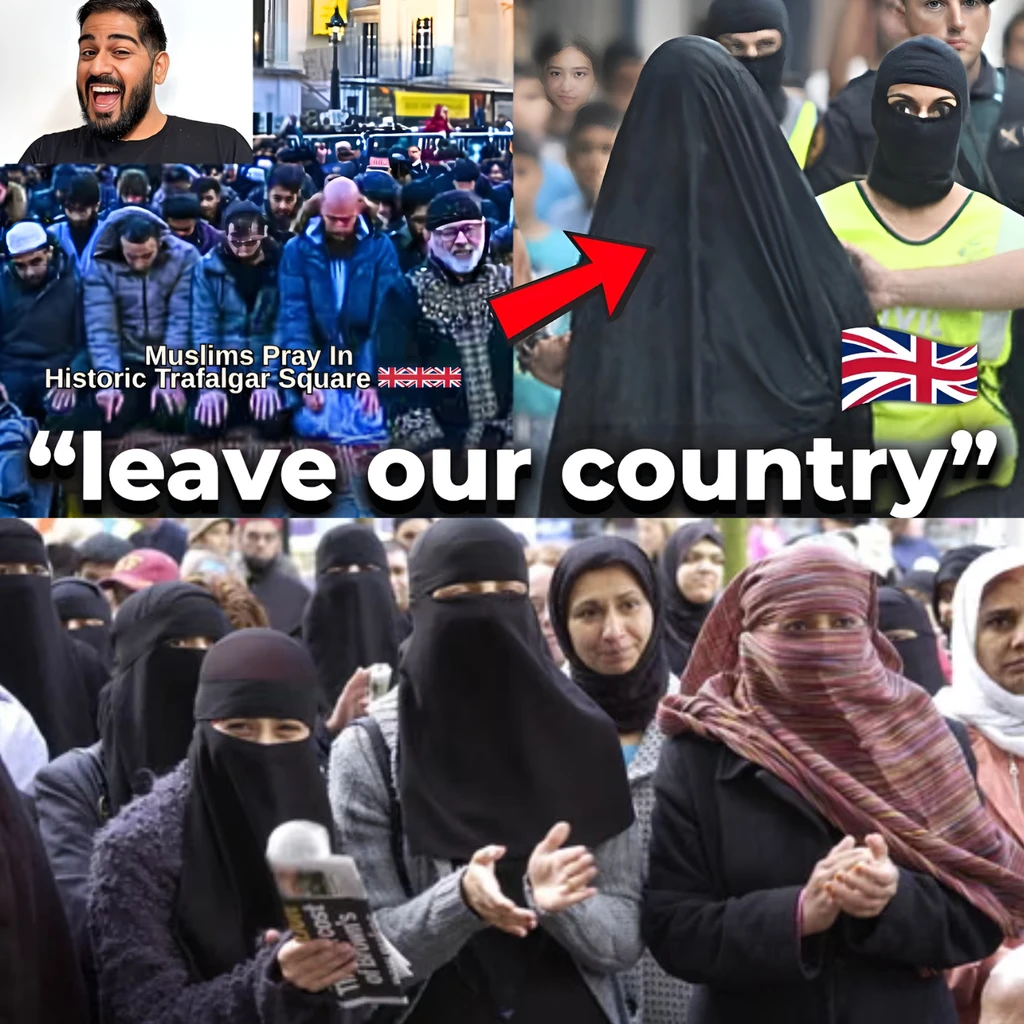
The Night Fear Took Over the Streets: Inside the Chaos, Tension, and Cultural Shockwaves Rocking Modern Europe
The screams echoed through the crowded streets long before the flashing lights arrived.
A woman shouted “terrorist” in a trembling voice as frightened pedestrians scattered across the pavement. Sirens pierced the cold evening air. Phones came out instantly. Videos spread online within minutes. And suddenly, one explosive confrontation ignited a wildfire of fear, anger, and confusion across an already divided society.
What began as a demonstration quickly spiraled into something much darker.
Now, across major cities, ordinary residents are asking the same unsettling question:
What is happening to the streets they once called home?
For many longtime locals, the atmosphere has changed dramatically over the past decade. Entire neighborhoods that once felt familiar now feel almost unrecognizable. Small family-owned shops have disappeared. Languages from around the world dominate crowded sidewalks. Communities that once knew each other by name now pass in silence.
And beneath it all, according to many residents, sits a growing tension nobody wants to openly discuss.
Recent viral footage has only intensified those fears.
One shocking clip showed crowds gathering during a heated protest as angry chants erupted in the middle of a packed public square. Witnesses described scenes of panic and confusion after reports emerged that a man allegedly attempted to attack demonstrators with a large blade.
Another disturbing video showed emergency vehicles engulfed in flames overnight in a heavily populated district. Thick black smoke climbed into the sky while stunned residents recorded the destruction from apartment windows nearby.
The footage spread online like wildfire.
Comment sections exploded.
Some viewers called it proof that social tensions are spiraling out of control. Others accused media outlets of hiding the severity of what is happening on the streets. Meanwhile, critics warned that fear-driven narratives could deepen divisions even further.
But regardless of which side people take, one thing is undeniable:
The emotional temperature is rising.
And fast.
“I Don’t Feel Safe Anymore”
Perhaps the most haunting aspect of the recent wave of viral interviews is not the outrage.
It is the sadness.
Elderly residents interviewed in crowded urban neighborhoods spoke with visible heartbreak about how drastically their communities have transformed. Some described feeling isolated inside areas where they had spent their entire lives.
One older resident quietly explained that years ago, neighbors would leave their doors open. Families knew each other. Children played together outside. People trusted one another.
Now?
“Everyone keeps to themselves,” he said. “It doesn’t feel the same anymore.”
Another resident admitted she no longer feels comfortable walking alone at night.
Others pointed to overcrowding, rising crime, litter-filled streets, and a growing sense of disorder. Several interviewees claimed they rarely hear English spoken in certain neighborhoods anymore, saying entire communities now exist parallel to one another rather than together.
What makes the situation especially complex is that many of the harshest criticisms are not coming from native-born locals alone.
Some are coming from immigrants themselves.
In several interviews circulating online, longtime migrants openly expressed frustration over newer arrivals who they believe refuse to integrate into society. One man who arrived decades ago said he was grateful for the opportunities he received and believes newcomers should respect local laws and traditions.
Instead, he claimed, many arrive only to “take what they can get.”
Another resident described witnessing drug activity and repeated muggings near his neighborhood.
The frustration in these interviews is raw, emotional, and deeply personal.
And it reflects a broader anxiety spreading through parts of modern Europe today.
The internet has transformed local incidents into international spectacles overnight.
One dramatic clip showing crowds chanting in the streets racked up millions of views within hours. Another featuring emotional confrontations between protesters and counter-protesters spread rapidly across multiple platforms.
Online commentators immediately jumped into battle.
Some framed the scenes as evidence of cultural collapse.
Others accused influencers and internet personalities of deliberately exaggerating tensions for clicks and engagement.
Social media algorithms only intensified the chaos.
The more shocking the footage, the faster it spread.
The more emotional the reactions, the larger the audience became.
And soon, complex social issues were reduced to viral soundbites, clipped arguments, and rage-filled captions designed to provoke maximum outrage.
Experts warn this cycle can be dangerously addictive.
Fear generates attention.
Attention generates profit.
And outrage has become one of the internet’s most valuable currencies.
A Generation Growing Up Amid Uncertainty
Behind the headlines and viral clips lies a deeper issue affecting millions of ordinary people: identity.
Young people growing up in multicultural urban centers are increasingly caught between multiple worlds. Some feel disconnected from the traditions of their parents. Others feel alienated from the societies around them.
This identity crisis has created fertile ground for social fragmentation.
Communities are becoming more polarized.
Trust between groups is eroding.
And online spaces often amplify the most extreme voices rather than encouraging understanding.
Meanwhile, economic pressures continue to worsen the situation.
Housing costs are soaring.
Public services are overstretched.
Competition for jobs has intensified.
As frustrations rise, many citizens begin searching for someone to blame.
That is when fear becomes dangerous.
History has shown repeatedly that during periods of uncertainty, societies often fracture along cultural, ethnic, or religious lines.
And once those fractures deepen, repairing them becomes incredibly difficult.
The Streets No Longer Feel the Same
Residents interviewed across multiple cities consistently described one shared feeling:
Disconnection.
Not necessarily hatred.
Not necessarily rage.
But loss.
Loss of familiarity.
Loss of community.
Loss of identity.
Some neighborhoods now contain dozens of cultures existing side by side yet rarely interacting in meaningful ways. Critics argue that integration has failed in many areas, creating isolated pockets where people live entirely separate social lives despite sharing the same streets.
Others reject this characterization completely, arguing that diversity itself is not the problem. Instead, they point to poverty, inequality, political dysfunction, and years of failed urban planning.
Both sides accuse the other of refusing to face reality.
And in the middle of this conflict are ordinary families simply trying to live peacefully.
Fear Sells — But Reality Is More Complicated
The truth is rarely as simple as viral videos make it appear.
Yes, there are real tensions.
Yes, some residents genuinely feel unsafe.
Yes, dramatic demographic changes have transformed parts of major cities.
But reality is also far more nuanced than internet outrage suggests.
Millions of immigrants work hard, raise families, and contribute positively to society every single day. Entire industries depend on migrant labor. Many communities function peacefully and successfully despite cultural differences.
At the same time, dismissing public fears entirely can also backfire.
When people feel their concerns are ignored, resentment grows stronger underground.
That resentment eventually erupts — often online first, then later in the real world.
The challenge facing modern societies is finding a way to discuss difficult issues honestly without descending into hatred or hysteria.
And right now, many fear that balance is collapsing.
A Continent at a Crossroads
Across Europe, debates about identity, migration, religion, security, and national culture are becoming impossible to avoid.
The streets themselves have become symbolic battlegrounds.
Every protest.
Every viral confrontation.
Every shocking headline.
Every act of violence.
Each incident adds fuel to an already volatile atmosphere.
For some citizens, these moments represent proof that society is changing too quickly.
For others, the backlash itself is the greater danger.
The divide grows wider with every passing month.
And the internet ensures the conflict never truly cools down.
Because outrage never sleeps.
What Happens Next?
That is the question haunting millions right now.
Can multicultural societies rebuild trust before divisions deepen further?
Can communities find common ground despite growing fear and suspicion?
Or are these tensions only the beginning of something much larger?
Nobody knows for certain.
But one thing is clear:
The emotional battle over identity, belonging, and the future of Europe is no longer happening quietly behind closed doors.
It is unfolding publicly.
Loudly.
Violently at times.
And in the age of smartphones and viral media, the entire world is watching in real time.
As night falls over crowded city streets filled with sirens, chants, flashing lights, and anxious citizens filming everything around them, one unsettling reality remains impossible to ignore:
The old Europe many people remember is fading.
What replaces it may define an entire generation.