Bill Maher Has A RUTHLESS Message To Palestinian Islamists That’s Blowing Up Now!
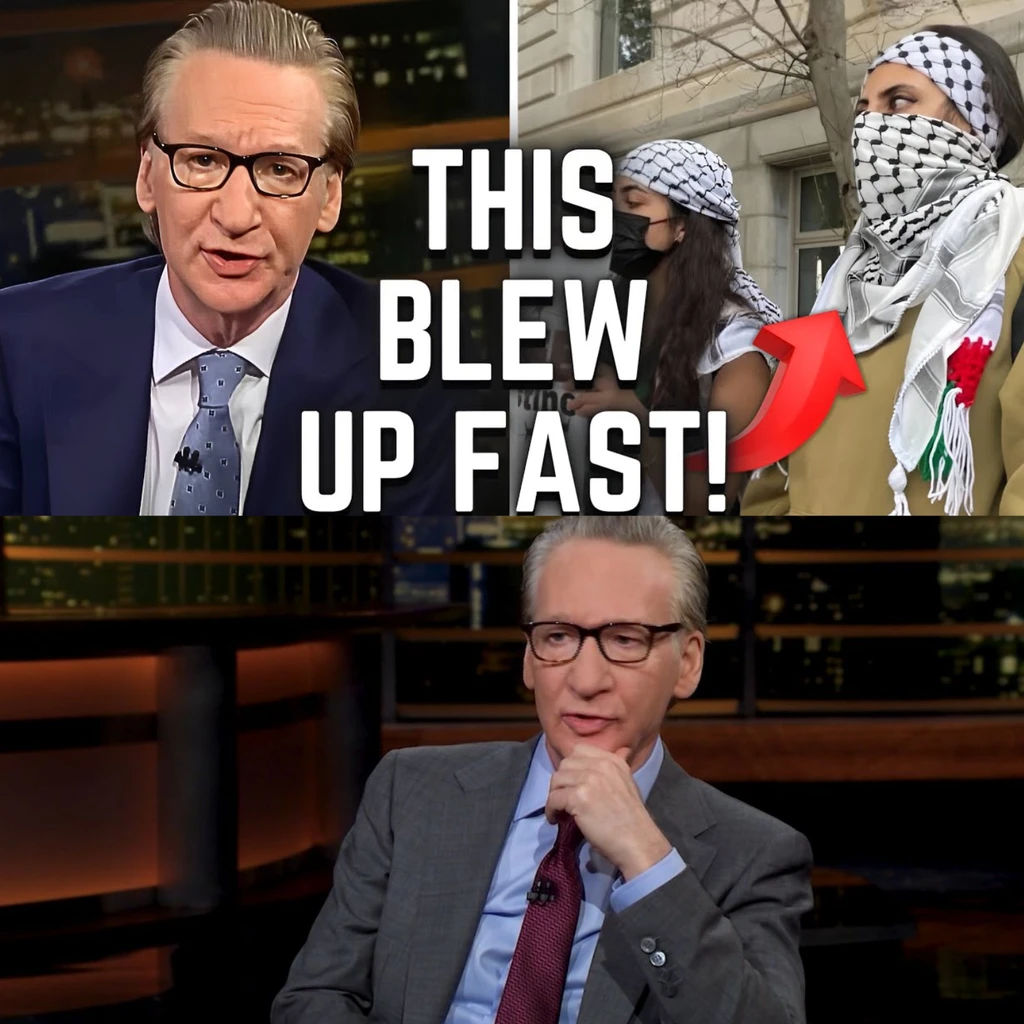
A packed studio went silent.
Then came the sentence that detonated across the internet within hours.
“If you believe one nation is the greatest villain on Earth, you either don’t read — or you don’t care about hypocrisy.”
The moment, delivered during a televised commentary segment that has since gone viral worldwide, instantly ignited a digital explosion of outrage, agreement, backlash, and relentless debate across social media platforms.
Clips of the monologue — sharp, emotional, and unapologetically provocative — have now been viewed millions of times, triggering one of the most intense online arguments in recent memory about perception, bias, global conflicts, media narratives, and moral inconsistency.
And at the center of it all lies one explosive question:
Why do certain nations become global symbols of blame while others with far worse records are rarely mentioned in the same breath?
THE MOMENT THAT SET THE INTERNET ON FIRE
The viral segment began as a monologue discussing rising global hostility, selective outrage, and what the speaker described as “inconsistent moral judgment” in public discourse.
The tone quickly escalated.
The speaker argued that certain discussions disproportionately focus on one small nation while ignoring larger global powers or regimes accused of far more severe human rights abuses.
To support the claim, a long list of countries and crises was referenced — including regions affected by war, authoritarian rule, humanitarian disasters, and violent extremism.
The argument was blunt:
Why, the speaker asked, does global outrage appear so unevenly distributed?
Within minutes of airing, the clip spread across platforms at lightning speed.
Reaction channels exploded.
Debate podcasts dissected every sentence.
Comment sections turned into battlegrounds.
And hashtags tied to the discussion began trending worldwide.
THE CORE CLAIM: “SELECTIVE OUTRAGE IS DISTORTING REALITY”
At the heart of the monologue was a controversial assertion:
That global attention is often disproportionately focused on one geopolitical conflict while other humanitarian crises receive significantly less coverage or emotional response.
The speaker argued that this imbalance creates a distorted moral perception of world events — where certain actors are demonized consistently, while others are either overlooked or minimized.
Supporters of the argument say this reflects a real media bias problem: some crises receive continuous coverage while others fade from public awareness despite severe conditions.
Critics, however, argue that comparing unrelated conflicts and historical contexts oversimplifies extremely complex geopolitical realities.
The disagreement quickly escalated beyond reasoned debate and into emotional confrontation online.
SOCIAL MEDIA ERUPTS INTO TWO OPPOSING CAMPS
Almost immediately after the clip went viral, audiences split into two sharply divided camps.
One group praised the commentary as a bold challenge to what they see as media imbalance and intellectual hypocrisy.
Another group condemned it as dangerous rhetoric that risks minimizing legitimate concerns about ongoing conflicts and human rights issues.
Comment sections filled with accusations from both sides:
“Finally someone says it like it is.”
“This is selective storytelling disguised as truth.”
“Why are some lives always politicized more than others?”
“Dangerous generalization dressed as analysis.”
The intensity of the reactions only fueled more engagement — and more visibility.
THE BILL MAHER SEGMENT THAT ADDED FUEL TO THE FIRE
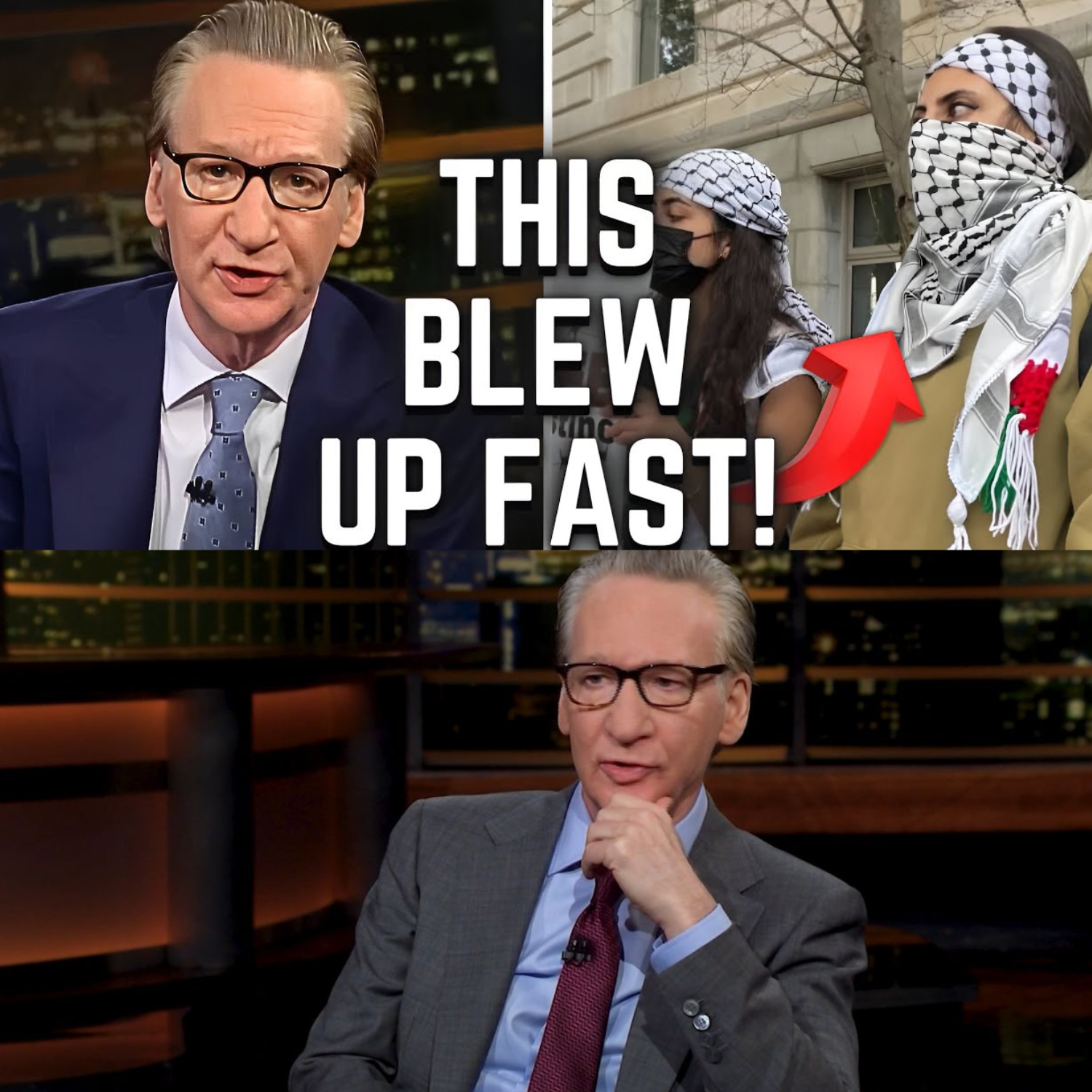
The viral commentary also included a reaction to a separate televised discussion involving comedian and political commentator Bill Maher, who has frequently spoken about global conflicts, antisemitism, and ideological polarization.
In the referenced segment, Maher argued that some modern discourse around global conflicts reflects deep inconsistencies — particularly when comparing criticism of different nations and ideologies.
That clip, already widely circulated before, gained a second wave of virality when combined with the new commentary.
The overlap created a perfect storm of renewed debate.
ACCUSATIONS OF DOUBLE STANDARDS DOMINATE DISCUSSION
A major theme in the viral monologue was the idea that moral outrage is often applied inconsistently across global events.
The speaker pointed to examples of widespread human rights violations, authoritarian regimes, armed conflicts, and extremist violence in multiple regions of the world.
The argument was not that criticism of any one nation is invalid — but that focusing disproportionately on one while ignoring others creates a distorted worldview.
Critics responded sharply, arguing that comparisons like these can flatten important historical and political differences between conflicts.
They also warned that framing global issues as a “competition of suffering” can itself be misleading and harmful.
The internet, as always, amplified both extremes.
ANTISEMITISM DEBATE REIGNITES ONLINE
One of the most sensitive aspects of the viral discussion centered around claims of antisemitism in modern discourse about global conflicts.
The speaker argued that criticism of a nation or government is sometimes wrongly conflated with prejudice against a religious or ethnic group.
This distinction sparked immediate backlash and counterarguments online.
Supporters of the speaker insisted that criticism of policy or state actions must remain separate from hatred toward people.
Critics countered that rhetoric can sometimes blur that line in practice, leading to real-world discrimination and hostility.
The debate quickly expanded far beyond the original clip, pulling in historical, cultural, and political context from multiple regions.
THE “NO JEWS, NO NEWS” CONTROVERSY RESURFACES
Another controversial phrase referenced in the broader discussion — “No Jews, no news” — resurfaced across social media, adding further emotional intensity to the debate.
Some users interpreted it as a critique of media bias in global coverage.
Others saw it as an oversimplification that risks reinforcing harmful narratives.
Once again, interpretation depended heavily on political and emotional perspective.
DISCUSSIONS ABOUT GLOBAL CONFLICTS BECOME CENTRAL
The monologue also referenced multiple global crises, including conflicts, humanitarian disasters, and authoritarian regimes across various regions of the world.
The intention, according to supporters, was to highlight inconsistency in global moral attention.
However, critics argued that grouping such diverse situations together risks oversimplifying extremely complex geopolitical realities.
Experts note that comparisons between conflicts are often politically sensitive because they involve differing histories, scales of violence, and international involvement.
On social media, however, nuance rarely survives long enough to matter.
THE ROLE OF MEDIA IN SHAPING PERCEPTION
A key argument raised in the viral segment was that media coverage plays a powerful role in shaping public perception of global morality.
The speaker suggested that certain conflicts receive sustained attention while others are comparatively underreported.
Media analysts agree that coverage patterns vary significantly depending on geography, access, and political interest — but emphasize that this does not necessarily indicate intentional bias.
Instead, coverage is often driven by audience demand, accessibility, and geopolitical relevance.
Still, perception matters — and perception is what drives online outrage cycles.
SOCIAL MEDIA ALGORITHMS AMPLIFY EVERYTHING
Experts say the viral explosion of this clip is a textbook example of how modern platforms operate.
Emotionally charged content spreads faster than neutral analysis.
Controversial statements generate more engagement than balanced discussion.
And once a topic begins trending, algorithms reinforce its visibility — regardless of accuracy or context.
The result is an attention economy where nuance is often sacrificed for virality.
THE DEEPER QUESTION BEHIND THE OUTRAGE
Beyond the arguments, accusations, and reactions, the viral debate raises a deeper question:
How do people form moral judgments about global events in an age of constant information overload?
With thousands of headlines competing for attention daily, audiences inevitably prioritize certain narratives over others.
That selectivity can create perceptions of imbalance — even when no deliberate bias exists.
But once those perceptions take hold, they are difficult to reverse.
SUPPORTERS SAY THE MESSAGE IS ABOUT MORAL CONSISTENCY
Those defending the viral commentary argue that its core message is not about defending any specific actor or minimizing suffering.
Instead, they say it is about urging consistency in moral outrage — applying similar standards when evaluating different global situations.
They believe the conversation highlights an uncomfortable truth:
That human empathy is often unevenly distributed depending on media framing, cultural familiarity, and political alignment.
CRITICS WARN AGAINST OVERSIMPLIFICATION
On the other hand, critics argue that framing global conflicts in terms of moral equivalence risks flattening important distinctions.
They caution that comparing unrelated situations can obscure accountability and historical context.
They also warn that emotionally charged rhetoric can unintentionally fuel polarization rather than understanding.
THE INTERNET REMAINS DIVIDED
Days after the clip went viral, the debate shows no signs of slowing down.
New reaction videos continue to emerge.
Podcasters continue dissecting every sentence.
Comment threads remain active and volatile.
And audiences remain split between admiration and alarm.
Some see a bold challenge to selective moral narratives.
Others see a dangerous oversimplification of complex realities.
ONE THING IS CERTAIN: THE DEBATE IS FAR FROM OVER
In an age where every statement can become global in minutes, the line between commentary and controversy has never been thinner.
What began as a televised monologue has now evolved into a worldwide discussion about truth, perception, bias, media influence, and moral responsibility.
And as long as global conflicts, political narratives, and social media algorithms continue to intersect, one thing is guaranteed:
The internet will never stop arguing about what is fair, what is true, and who gets heard first.