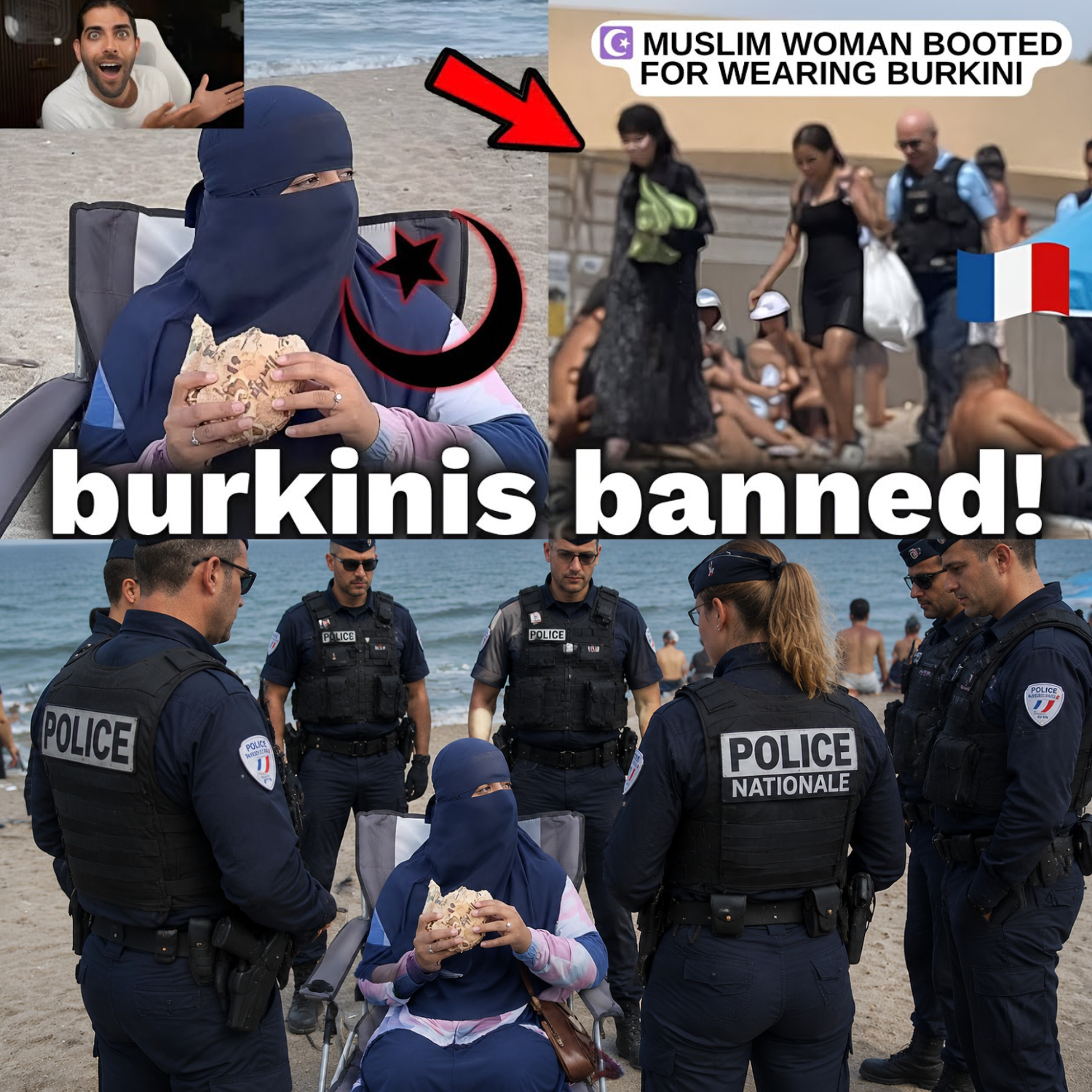
Muslim Woman’s Trip To The French Beach Ends In TOTAL DISASTER!
SHOCKING VIRAL VIDEO COMPILATION IGNITES GLOBAL ONLINE FIRESTORM OVER MODERN MORALITY, FREEDOM, AND PUBLIC BEHAVIOR
A jaw-dropping wave of viral street interviews, livestream clips, and heated confrontations has exploded across social media, leaving millions stunned, outraged, and deeply divided over what happens when radically different worldviews collide in everyday public spaces.
The compilation, which has been circulating rapidly on multiple platforms, stitches together dozens of real-world encounters filmed across busy city streets, beaches, transport hubs, and public gatherings. What begins as casual footage quickly escalates into intense debates about clothing, behavior, personal boundaries, and what different people believe is “acceptable” in modern society.
Within hours of going viral, the footage sparked millions of comments, with viewers describing it as everything from “eye-opening truth” to “completely chaotic cultural overload.” Others called it a disturbing reflection of how fast everyday life can turn into confrontation when deeply held beliefs collide in shared public environments.
A BEACH SCENE THAT LEFT VIEWERS STUNNED
One of the most widely shared clips shows a woman at a seaside location explaining her challenges with eating and socializing while maintaining her full-body covering. In the video, she demonstrates an unusual solution—using a small private tent-like setup to eat discreetly while remaining covered.
The scene quickly sparked disbelief online, with viewers reacting strongly to the idea that someone would need a physical enclosure just to eat comfortably in public.
Some viewers saw it as a creative adaptation to personal values and comfort. Others described it as symbolic of how divided modern public spaces have become, where personal expression and social expectations can clash in unexpected ways.
The conversation escalated further when commentary in the clip shifted toward whether public environments should better accommodate different forms of dress and lifestyle, or whether individuals should adapt more to local norms when in shared spaces.
STREET CONFRONTATIONS SPARK HEATED DEBATE
Another segment of the viral compilation shows multiple street encounters where individuals confront strangers over clothing choices, public behavior, or perceived disrespect of cultural norms.
In one particularly tense moment, a passerby is aggressively questioned about attire deemed inappropriate by the filmer. The confrontation quickly escalates into a shouting match, with bystanders stepping in to de-escalate the situation.
Another clip shows a heated exchange between two strangers after one individual criticizes another’s appearance in a public recreational space. The argument intensifies, drawing attention from nearby crowds and highlighting how quickly personal opinions can turn into public disputes.
Social media users were sharply divided. Some insisted that public spaces should remain neutral zones where everyone is free to express themselves. Others argued that visible cultural differences in dress and behavior inevitably create friction in shared environments.
TRANSPORT AND PUBLIC SPACE INCIDENTSGO VIRAL
Several clips from public transportation systems also contributed to the viral surge. One video shows a driver and passenger engaged in a highly uncomfortable exchange, where unsolicited comments lead to visible discomfort and eventual intervention by others nearby.
Another widely shared clip shows a performer in a transit station having their performance interrupted by an individual who appears displeased, leading to a brief but chaotic disruption.
These moments, though brief, became symbolic for many viewers of a broader issue: the lack of shared agreement on public etiquette in increasingly diverse environments.
Commenters debated whether these incidents represent isolated misunderstandings or signs of deeper societal friction that is becoming more visible through smartphone cameras.
RELIGION, IDENTITY, AND MODERN LIFE COLLIDE ONLINE
A significant portion of the viral compilation includes interviews and commentary from individuals discussing deeply personal beliefs about modesty, morality, and behavior.
Some voices in the video argue that society has become overly permissive and that stricter personal standards are necessary for social harmony. Others strongly disagree, insisting that personal freedom—including clothing choices, nightlife, and self-expression—is a fundamental right that should not be judged through moral or religious frameworks.
One particularly emotional monologue features a speaker reflecting on young women’s behavior, expressing concern in deeply personal terms. The clip has been widely debated, with some interpreting it as heartfelt concern and others criticizing it as judgmental and controlling.
The intensity of these discussions has fueled a broader online conversation about how moral values differ dramatically across communities, even within the same cities and neighborhoods.
PUBLIC REACTIONS: “FREE EXPRESSION” VS “SOCIAL BREAKDOWN”
As the compilation spread, reactions online split into two dominant camps.
One group of viewers argues that the videos highlight a breakdown in shared social norms, pointing to repeated confrontations, discomfort in public spaces, and conflicting expectations of behavior. They believe that without clearer boundaries, everyday interactions will continue to become more tense and unpredictable.
Another group sees the clips differently, arguing that what is being shown is simply the reality of multicultural public life—messy, imperfect, but ultimately rooted in coexistence. They emphasize that disagreement does not necessarily mean collapse, but rather adjustment and negotiation between different lifestyles.
A third group expressed concern about how social media amplifies isolated moments, turning brief encounters into viral symbols that may not reflect broader reality.
SOCIAL MEDIA AMPLIFICATION EFFECT
Experts in online behavior note that compilations like this tend to emphasize conflict because it drives engagement. Short clips lacking context can make isolated incidents appear like widespread trends.
Once uploaded, such videos are rapidly reshared with commentary layered on top, often intensifying emotional reactions. Over time, the original context becomes less important than the narrative built around it.
This has led to growing concern about whether viral content is shaping public perception in ways that exaggerate tension between groups, rather than reflecting everyday coexistence.
A WORLD WATCHING ITSELF IN REAL TIME
What makes the viral compilation particularly powerful is not just the content itself, but the feeling it creates: a world constantly filming, reacting, and judging itself in real time.
Beaches, streets, transport stations, and public squares become stages where personal values collide. Every disagreement becomes potential content. Every misunderstanding becomes a global talking point.
To some viewers, this is a sign of transparency and free expression. To others, it is evidence of increasing social fragmentation, where shared understanding is harder to maintain.
THE FINAL QUESTION LEFT UNANSWERED
As the clips continue to circulate and new versions appear daily, one question dominates the conversation online:
Is this a glimpse of a society in conflict—or simply a society learning, awkwardly and loudly, how to coexist?
There is no single answer that satisfies everyone. And perhaps that is exactly why the video continues to spread—because it does not resolve anything. It simply shows, in raw fragments, how complicated modern public life has become when deeply different values meet in the same space.
And in the age of constant recording, nothing stays private, and nothing disappears.