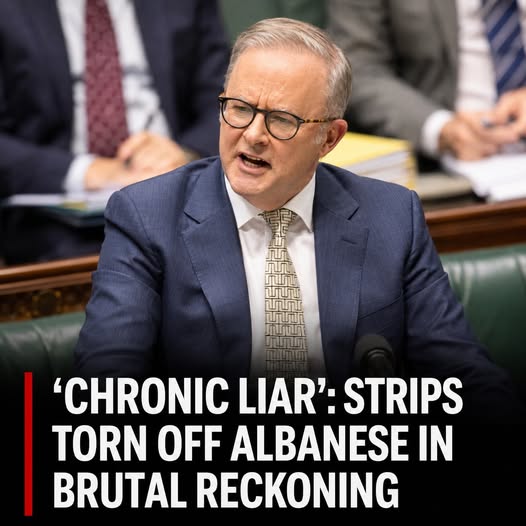
Anthony Albanese is facing a fresh wave of political pressure after being accused of delivering what critics are calling one of the biggest broken tax promises in recent Australian politics.
The controversy exploded after senior opposition figures claimed Australians were losing trust in the Prime Minister following major tax changes that opponents argue directly contradict previous election commitments.
What began as a debate over tax policy has rapidly transformed into a much larger argument about credibility, trust and whether voters can still believe government promises made before an election.
That shift is exactly why the issue is generating so much attention.
Tax debates normally focus on numbers.
This one is increasingly becoming about trust.

Anthony Albanese is facing renewed criticism as political opponents accuse Labor of abandoning major tax commitments and damaging public trust.
The latest backlash centres on Labor’s tax changes and growing claims that voters were given a very different impression before the election.
Opposition figures have seized on the issue, arguing Australians are becoming increasingly frustrated by what they see as a widening gap between campaign promises and government decisions.
The language used by critics has become increasingly aggressive.
Some opposition MPs have described the situation as one of the biggest trust failures facing the government since coming to power.
That criticism has resonated strongly among sections of the business community, investors and property owners already concerned about economic uncertainty.
Many argue tax settings play a major role in long-term financial planning.
When governments change direction unexpectedly, confidence can quickly be affected.
That concern is now becoming a central part of the political fight.
Rather than focusing solely on the technical details of the reforms, critics are concentrating on a far simpler argument.
Can voters trust what politicians say before an election?
It is a question that has repeatedly damaged governments on both sides of politics over the years.
Once public debate shifts from policy details to trust, political problems often become much harder to control.
That is because trust arguments are easier for voters to understand than complicated tax legislation.
You do not need to understand every financial detail to have an opinion about whether a promise was kept.
The opposition clearly understands that dynamic.
Instead of fighting purely on economics, critics are now framing the issue as a broader question of honesty and accountability.
That approach dramatically expands the political damage a controversy can create.
People who may never be directly affected by the tax changes can still react negatively if they believe promises have been broken.
The government, meanwhile, continues defending its position by arguing the reforms are necessary and responsible.
Supporters say economic conditions change and governments sometimes need to make difficult decisions after taking office.
Critics reject that argument.
They insist the issue is not whether governments can change policy.
They argue the real issue is whether voters were given a clear picture before casting their ballots.
That disagreement now sits at the heart of the growing political battle.
The timing is also creating additional pressure.
Australians are already dealing with cost of living concerns, housing pressures and broader economic uncertainty.
In that environment, tax changes often attract far stronger reactions than they might during more stable periods.
Financial anxiety tends to amplify political frustration.
That reality is helping drive public interest in the debate.
Small business owners, investors and families planning for retirement have all been drawn into the discussion.
Many are now trying to understand how future financial decisions may be affected.
The uncertainty itself has become part of the story.
Political strategists know trust is one of the hardest things for governments to rebuild once doubts begin spreading.
Economic arguments can be debated.
Numbers can be defended.
But once voters start questioning credibility, every future announcement faces greater scrutiny.
That is the risk now confronting Labor.
The opposition is working aggressively to turn the tax debate into a broader referendum on trust.
If that strategy succeeds, the political consequences could extend well beyond this single policy fight.
Future government announcements may face tougher public skepticism.
Every major promise could be measured against the current controversy.
That is why the battle has become so significant.
It is no longer only about tax policy.
It is about political credibility.
And credibility is often one of the most valuable assets any government possesses.
Whether Labor can contain the backlash remains unclear.
But one thing is becoming increasingly obvious.
The argument has moved far beyond economics.
It has become a fight over trust.
And those battles rarely disappear quickly.