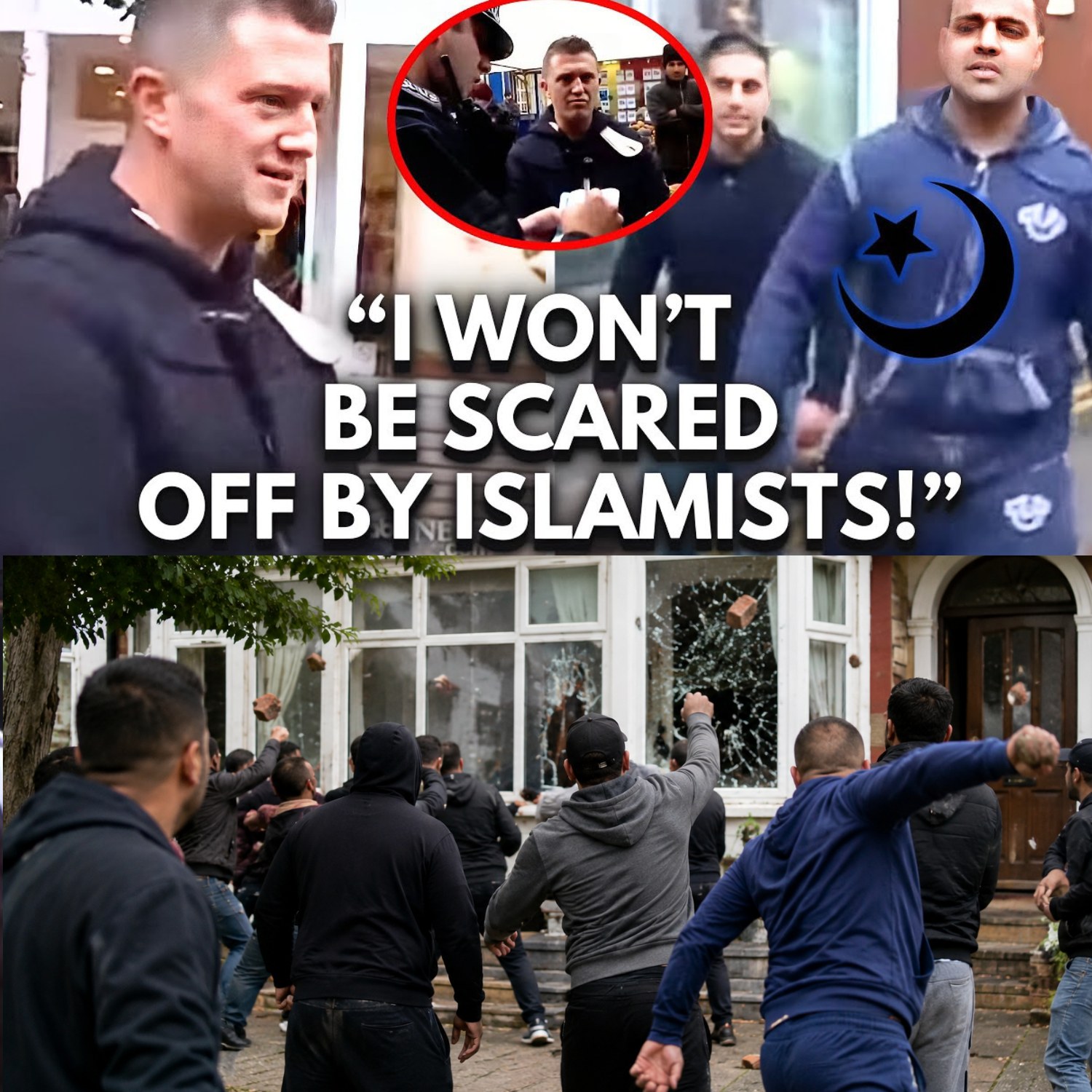
Entire MOB of Islamists Come After Tommy Robinson’s, BUT Police INTERVENE!
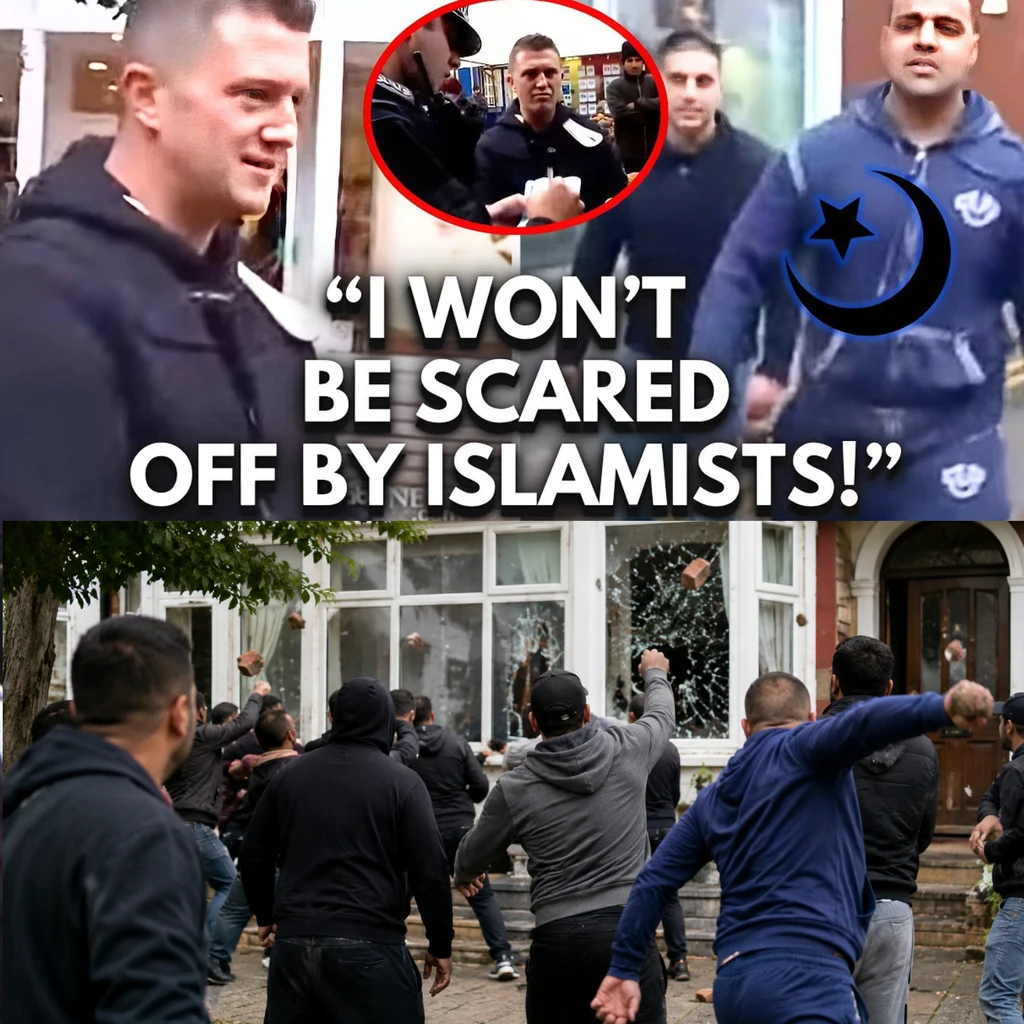
The Christmas Culture War Explosion: Viral Street Clashes, Online Fury, and the Internet Personalities Turning Holiday Chaos Into a Global Spectacle
It was supposed to be a season of lights, laughter, and holiday cheer.
Instead, the internet woke up to screaming crowds, viral confrontations, accusations of extremism, and a flood of explosive videos spreading across social media like wildfire.
By Christmas morning, millions of viewers were glued to livestreams and reaction clips as online personalities transformed holiday celebrations into a battleground of outrage, identity, religion, and internet warfare.
And the chaos is only getting louder.
“Welcome to Luton”: The Viral Street Encounter That Shocked the Internet
One of the most talked-about clips of the holiday season featured a controversial online commentator walking through a heavily divided town while tensions visibly escalated around him.
At first, the atmosphere seemed tense but manageable.
One man allegedly shouted, “Don’t point your camera at me,” before threatening violence.
Another confrontation quickly spiraled as crowds gathered around the scene.
The footage instantly exploded online.
Supporters claimed the clip proved certain communities had become dangerously polarized and hostile toward outsiders. Critics argued the creators intentionally provoke conflict to generate clicks and controversy.
But regardless of opinion, viewers could not stop watching.
The raw tension was impossible to ignore.
And the internet fed on every second of it.
The Rise of “Rage Content”
What we are witnessing is not just political commentary.
It is entertainment engineered for emotional impact.
Modern livestream personalities have mastered a formula that combines outrage, sarcasm, confrontation, identity politics, and dark humor into an addictive online spectacle.
Every clip is designed to trigger emotion.
Fear.
Anger.
Validation.
Shock.
Laughter.
And during the holiday season — when emotions already run high — the formula becomes even more explosive.
This year, creators blended Christmas imagery with controversial commentary, transforming memes, parody advertisements, and reaction videos into viral content machines attracting millions of views.
The internet responded exactly as expected.
Some viewers praised the creators for “speaking uncomfortable truths.”
Others accused them of spreading division, fear, and hatred disguised as comedy.
Either way, the clicks kept coming.
The Meme War Nobody Can Escape
Social media has now turned global conflicts into meme culture.
Nothing is sacred anymore.
Not religion.
Not tragedy.
Not identity.
Not even Christmas.
Creators mocked internet stereotypes using parody merchandise ads, fake holiday promotions, exaggerated conspiracy jokes, and over-the-top satire designed to provoke maximum reactions.
Some viewers laughed.
Others were horrified.
One controversial segment featured creators joking about online conspiracy theories involving secret payments and hidden agendas, wrapped inside absurd holiday-themed comedy sketches.
The satire was intentionally outrageous.
And it worked.
Comment sections exploded with arguments that quickly spiraled into online warfare between supporters and critics.
Experts warn that meme culture has fundamentally changed how younger generations process serious global issues.
Complex subjects are no longer discussed calmly.
They are converted into viral clips, reaction memes, and emotional soundbites optimized for algorithms.
And the result is a nonstop outrage machine.
The Emotional Confession That Left Viewers Heartbroken
Amid the chaos, one viral clip struck a dramatically different tone.
A young woman wearing religious clothing admitted on camera that she hated wearing it.
Her emotional confession shocked viewers across multiple platforms.
With tears in her eyes, she described feeling trapped between faith, public expectations, online pressure, and personal identity.
“I wear it because I feel obligated,” she explained softly.
The internet immediately erupted.
Some accused her of betraying her religion.
Others praised her honesty.
Millions watched as the young woman later uploaded another emotional video revealing she was suffering mentally and feared disappointing her community.
The vulnerability of the moment stood in stark contrast to the aggressive confrontation videos dominating social media feeds.
And for many viewers, it became one of the most heartbreaking viral moments of the holiday season.
Mental health experts have increasingly warned that social media pressure can intensify religious, cultural, and identity struggles — especially for young creators suddenly exposed to massive online audiences.
When personal identity becomes public entertainment, the emotional consequences can become devastating.
Online Influencers Are Becoming Digital Street Preachers
The internet’s most controversial personalities no longer behave like traditional commentators.
They behave like movements.
Millions of followers now treat creators as trusted voices, cultural leaders, or ideological warriors rather than entertainers.
Their audiences repeat slogans, share clips, defend them aggressively online, and attack critics with near-tribal loyalty.
This transformation has created a new kind of influencer culture — one built around identity conflict and emotional mobilization.
Every livestream becomes a rally.
Every clip becomes ammunition.
Every controversy becomes fuel.
And because outrage spreads faster than nuance, the loudest voices dominate the algorithm.
“The Internet Rewards Conflict”
Media analysts say the rise of inflammatory reaction content is not accidental.
It is algorithmically profitable.
Platforms reward engagement.
And nothing generates engagement faster than anger.
The more emotionally charged the content becomes, the more likely viewers are to comment, repost, argue, and react.
As a result, creators are incentivized to push boundaries constantly.
More confrontation.
More controversy.
More emotional extremes.
This creates a dangerous cycle where creators feel pressure to escalate rhetoric to maintain attention.
Meanwhile, audiences become desensitized.
Yesterday’s shocking clip becomes today’s normal content.
And tomorrow requires something even more extreme.
Divided Streets, Divided Screens
The most unsettling aspect of the current online climate is how closely internet conflict now mirrors real-world tension.
Neighborhoods featured in viral videos are increasingly portrayed as symbols of larger cultural battles.
Crowded markets.
Religious festivals.
Street protests.
Public celebrations.
Even ordinary conversations can suddenly become ideological flashpoints once cameras appear.
Residents interviewed in several viral clips described feeling disconnected from their own communities.
Some spoke nostalgically about quieter times when neighbors trusted each other regardless of background.
Others rejected that narrative completely, arguing that online influencers exaggerate division and exploit fear for profit.
The truth likely exists somewhere in between.
But what is undeniable is that online outrage increasingly shapes real-world perception.
People now experience entire cities through viral clips rather than personal experience.
And those clips rarely show balance.
They show conflict.
Because conflict gets views.
Comedy, Satire, and the Blurred Line Between Entertainment and Extremism
One of the most controversial trends emerging online is the fusion of humor with ideological commentary.
Creators use jokes, irony, and memes to push highly provocative messages while maintaining plausible deniability.
If criticized, they claim it was “just satire.”
If praised, they lean deeper into the message.
This ambiguity allows controversial content to spread rapidly while avoiding direct accountability.
Viewers are left debating whether creators are serious, trolling, performing comedy, or deliberately radicalizing audiences through humor.
The answer is often all of the above.
Experts say this style of communication is especially effective with younger audiences raised on internet meme culture.
Humor lowers defenses.
Irony creates emotional distance.
And repeated exposure normalizes increasingly extreme rhetoric over time.
Fear, Identity, and the Future of Online Culture
Behind every viral argument lies a deeper emotional reality.
People are scared.
Scared of losing identity.
Scared of cultural change.
Scared of extremism.
Scared of censorship.
Scared of each other.
The internet amplifies all of it.
Every fear becomes content.
Every outrage becomes monetized.
Every emotional wound becomes public spectacle.
And during emotionally charged moments like the holiday season, those tensions become impossible to ignore.
The old internet once promised connection.
Today, many fear it is doing the opposite.
Communities fracture into ideological tribes.
Algorithms feed users content that reinforces anger.
And creators become increasingly rewarded for escalation rather than understanding.
A Holiday Season Defined by Viral Conflict
This Christmas, the loudest voices online were not singing carols.
They were arguing.
Reacting.
Mocking.
Provoking.
Livestreaming.
And millions watched every second.
What began as edgy internet commentary has evolved into something much larger — a digital battlefield shaping how entire generations understand identity, religion, culture, and conflict.
The creators dominating this landscape understand one thing better than anyone:
Emotion drives attention.
And attention is power.
As flashing livestream alerts continue lighting up phones around the world late into the night, one reality becomes increasingly clear:
The culture wars are no longer confined to forums or fringe websites.
They are mainstream entertainment now.
And the holiday season may have just become their biggest stage yet.